Posts

COMPARISON OF AGRICULTURAL PRODUCTIVITY OF INDIA AND CHINA

Image
COMPARISON OF AGRICULTURAL PRODUCTIVITY OF INDIA AND CHINA: INTRODUCTION: China and India are the world’s two most populous countries comprising 1/3 rd of the total world population. Most of the people of these two countries had been living in rural areas since 1000 years. Though India and China are similar in population terms, poverty, economic goals and most of the population depend on agriculture, China is a bit higher in agricultural productivity compared to that of India. The agricultural sector provides basic foundation for industrial exports with the supplies of food raw materials, labour and with foreign exchange earned through exports of primary production. CHINA IN AGRICULTURE: During 1950’s, the Chinese government planned to seize the land from the landlord class and then redistribute it to the peasants having insufficient or no land. Middle farmers were not under the eye of the government then.  They also transferred the collective ownership to owne...

THE STORY BEHIND THE UNIFICATION OF INDIAN STATE AFTER THE INDEPENDENCE

Image
THE STORY BEHIND THE UNIFICATION OF INDIAN STATE AFTER THE INDEPENDENCE: The story: When the Britishers ruled India, it was not a single unit but the entire area was divided into two distinct parts, British India and Princely India. The Princely India comprised of 562 states. They were not a part of British India but were influenced by the British. They ruled the princely states on the basis of two policies: 1) To annex or occupy them forcibly. 2) To acquire the power and gain tribute from the rulers of the princely states. Before 1857, British annexed the princely states but later they realized the importance of their support and then started the paramountcy over them with the British crown and protected the princely states as their allies. Each princely state had its own ruler, court of justice, railways, roads, currency, stamps etc. They were fixed to pay taxes to the British and none were allowed to maintain their own armies. The British when began the establishment of ...

WHITE REVOLUTION IN INDIA

Image
WHITE REVOLUTION IN INDIA: INTRODUCTION: White revolution means increase in the productivity of milk and its products. Verghese Kurien, the father of white revolution, turned a milk deficient country of ours to largest milk supplying country. He is named one among the eminent social entrepreneurs of the world. He made our country the largest milk exporting country. He introduced many institutions which were owned and managed by the farmers and run by the professionals. He was also awarded Padma vibhushan, World food prize, Magsaysay award and many more for his dedication towards this field. WHAT LEAD TO THE BEGINNING OF THIS REVOLUTION: Our country was a milk deficient country and the poverty was spread in the lanes of Indian society. Through the world food programme, United Nations Food and Agricultural organization provided food aid of milk powder and butter oil from the European Economic Community. The Indian milk cooperatives sought to make an innovative use of the ai...

EVOLUTION OF BANKING IN INDIA

Image
EVOLUTION OF BANKING IN INDIA: INTRODUCTION: The concept of banking was introduced during the period of Mauryan dynasty but not in the same way as they are available in the present generation. It has undergone many changes depending upon the requirements of the people. The first bank had been originated in the last decades of 17th century, the first bank namely the Bank Of Hindustan(1770-1829) and the second namely General Bank Of India(1786). There were three presidency banks namely Bank of Bengal, Bank of Bombay and Bank of Madras which were established under the charters of British East India company. These three banks merged into Imperial Bank Of India in 1921 which upon Independence, became the State Bank Of India in 1955. It acted as the central bank until RBI was set up in 1935. MAURYAN DYNASTY: The Mauryan emperors introduced an instrument called 'adesha', an order on the banker asking him to pay certain amount to the 3rd person which corresponds to the bill of ...

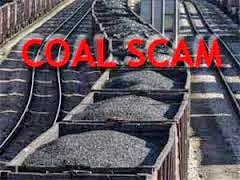
Coal Allocation: The story behind

Image
COAL ALLOCATION SCAM OR COALGATE SCANDAL: THE STORY BEHIND ITS NAME: There took place a political scandal In USA in the early 1970's named Watergate scandal which led to the resignation of Richard Nikson, the president of United States. The Watergate scandal involved the head of their country. In the same way, the coal allocation involves the head of our country. So it is named with a suffix 'gate'. INTRODUCTION TO THE SCANDAL: The coalgate is a political scandal concerning with the illegal allocation of coal blocks to the public and private companies without having an auction (regular process to allocate coal blocks) between 2006 and 2008. It led to the looting of 1.86 lakh crore approximately. The figure earlier was believed to be more than 10 lakh crore. But later on, the loss was estimated to be 1.86 lakh crore. The coal minister for 2004 was Shibu Soren, but when the discussions for competitive bidding just started, he had been forced to resign due to a...